Dear Friends,
In a year marked by rising food insecurity and devastating federal funding cuts experienced by many of our hunger relief partners, Harvest Against Hunger’s (HAH) commitment to increasing access to fresh healthy produce and building a more resilient and equitable food system in Washington has only grown stronger.
Because of you, we connected more people in need to nutritious food and continued laying the groundwork for long-term sustainable solutions to hunger and food waste by growing a powerful movement for community-based food systems.
Food insecurity stems from a combination of systemic issues, including poverty, economic inequality, social injustice, and limited access to nutritious food, and disproportionately affects those living in underserved areas and BIPOC communities. Community-based food systems have the potential for tackling hunger not just by feeding people, but by transforming the systems that create food insecurity in the first place. They drive the change by: - Providing access to local fresh produce that is often lacking in neighborhoods that don’t have grocery stores or markets with affordable, healthy food.
- Emphasizing sustainable practices such as organic farming, reduced transportation emissions, and regenerative agriculture.
- Cultivating a vibrant community where food producers and consumers make connections that empower communities to take control of their food systems, promoting health, resilience and social equity.
Thanks to your generosity, additional fresh produce is reaching neighbors in need while supporting local small to mid-scale growers that cultivate it and hunger relief organizations that distribute it to communities through food pantries, mobile markets, and meal programs –often working closely with community members to ensure the produce meets local needs. |
Program Spotlight: Farm to Food Pantry
|
Speaking of community-based food systems, our
Farm to Food Pantry
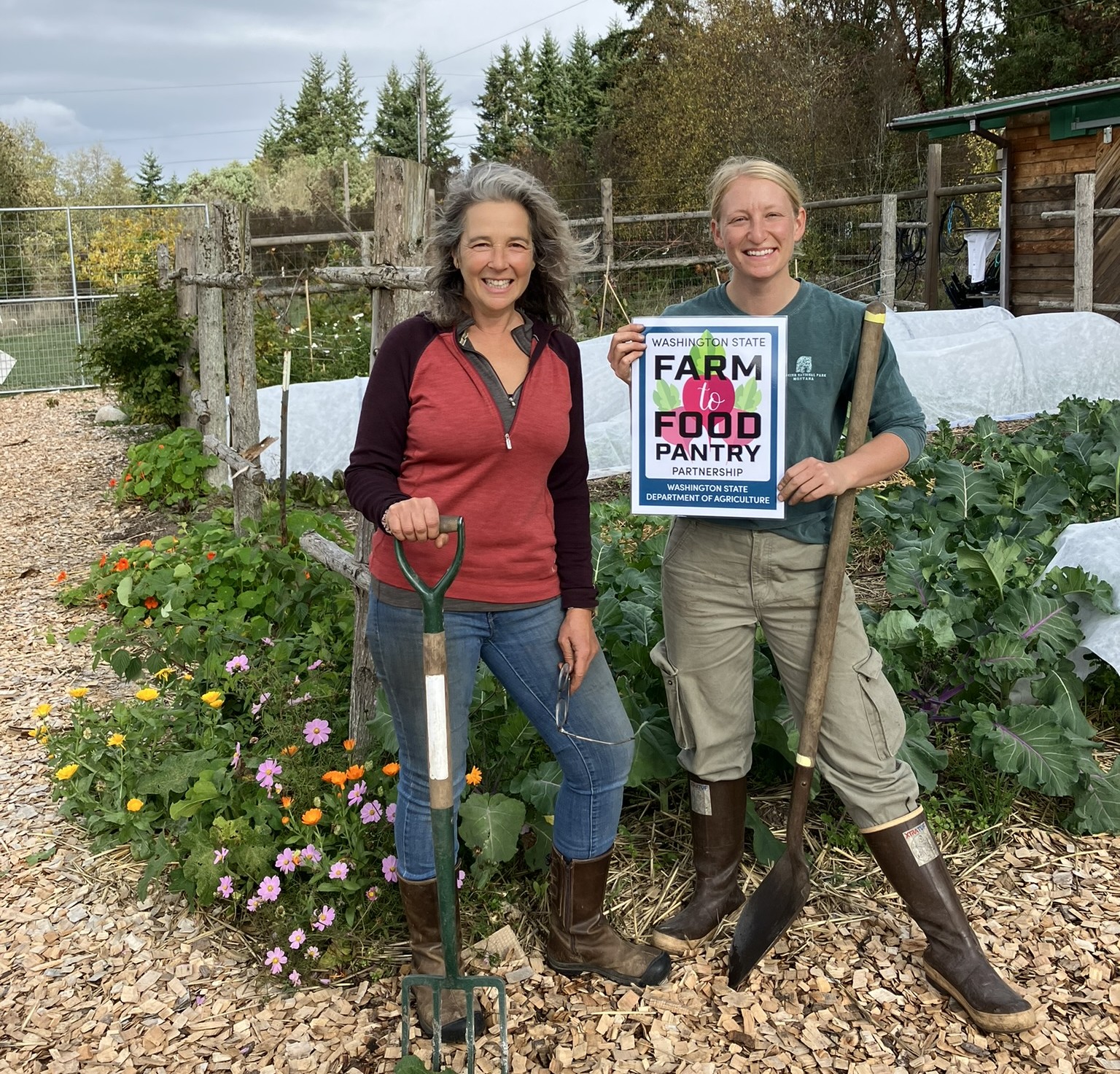
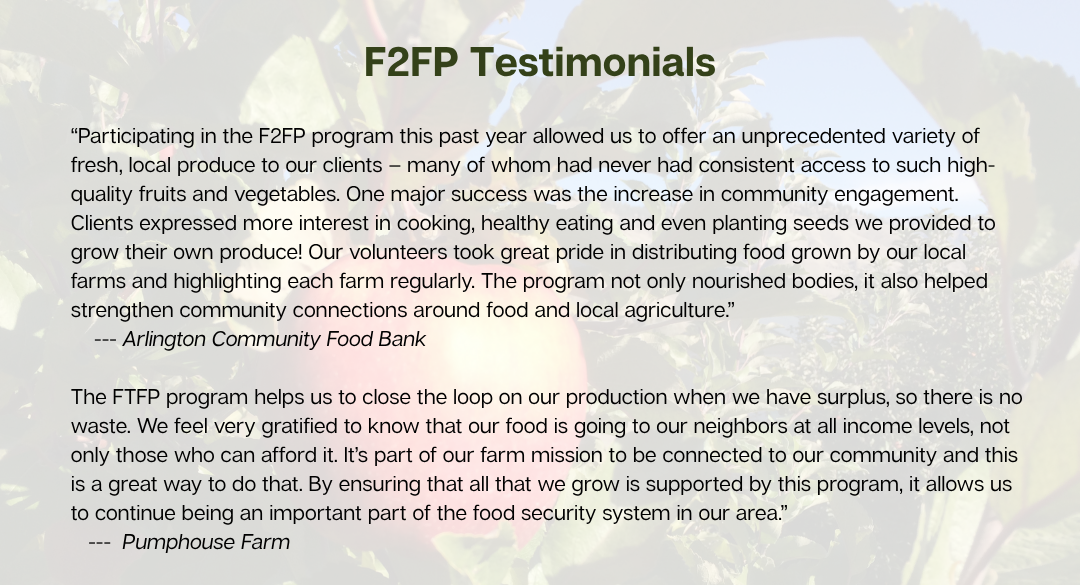
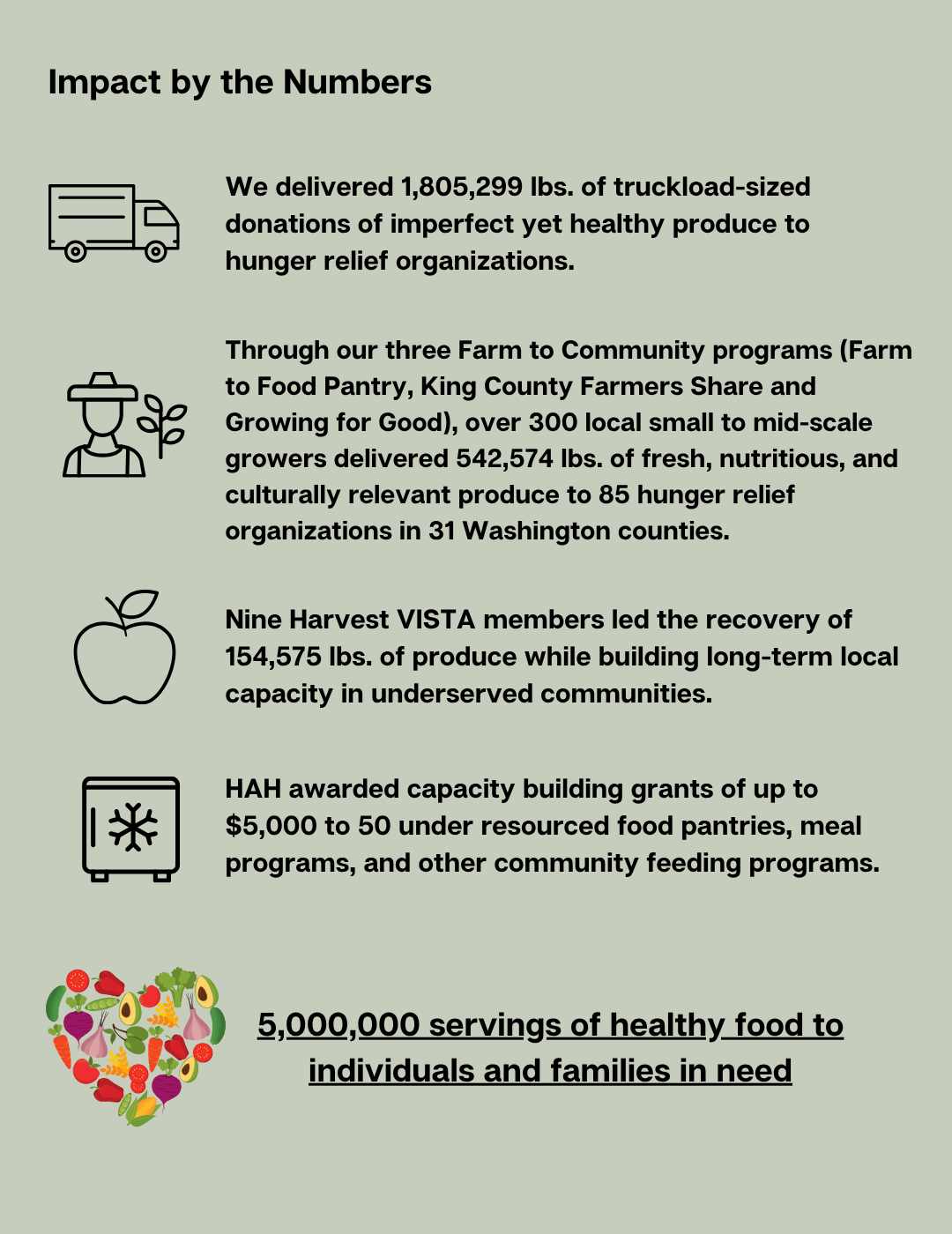
(F2FP) program has created many of them in the last 11 years. What started in 2014 with three hunger relief organizations purchasing from 12 small to mid-scale growers has now grown to support 39 hunger relief organizations purchasing from 229 small to mid-scale growers across 31 counties in Washington. Over the course of the past year, F2FP delivered 423,781 pounds of healthy local produce to hunger relief organizations, providing 189 different varieties of nutritious food. Through purchasing contracts with hunger relief organizations, $494,038 was paid to local growers to grow produce specifically for their local food pantries and meal programs.
|
|
|
In the most recent year-end evaluation survey we conducted, hunger relief organizations scored an 8.6/10 satisfaction rating for the variety and a 9.8/10 satisfaction rating for the quality of food they received from local growers. Additionally, 77.4% of food purchased traveled less than 30 miles from the farm to the distribution site, strengthening hyper-local relationships among food producers, food distribution sites and their clients. Participating hunger relief organizations and growers agree that F2FP is more than a safety net — it’s a force for community resilience, environmental sustainability and food equity. |
| |
|
Amazon Local Good x Farm to Community |
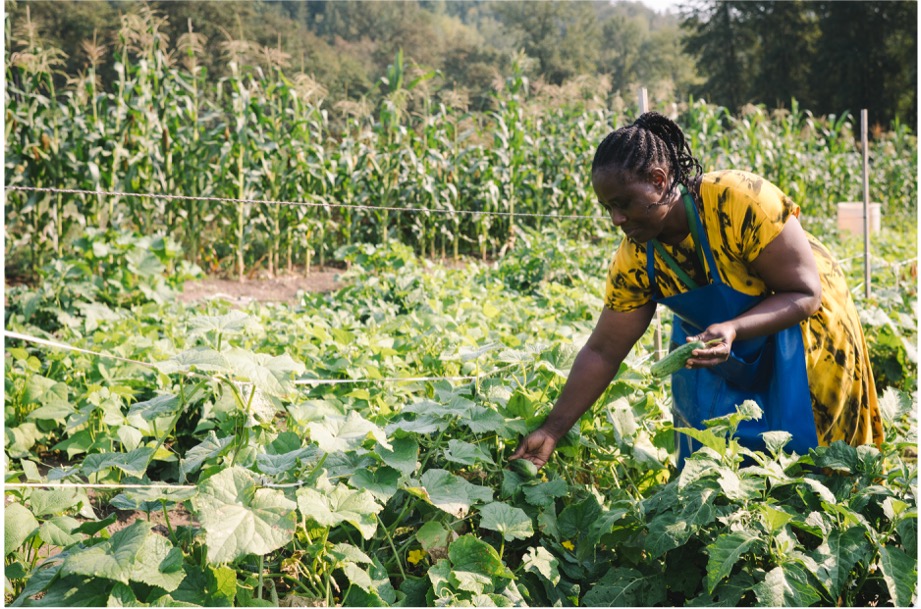
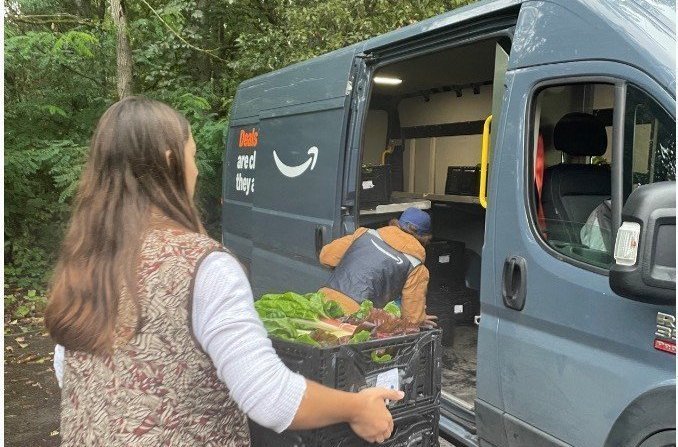
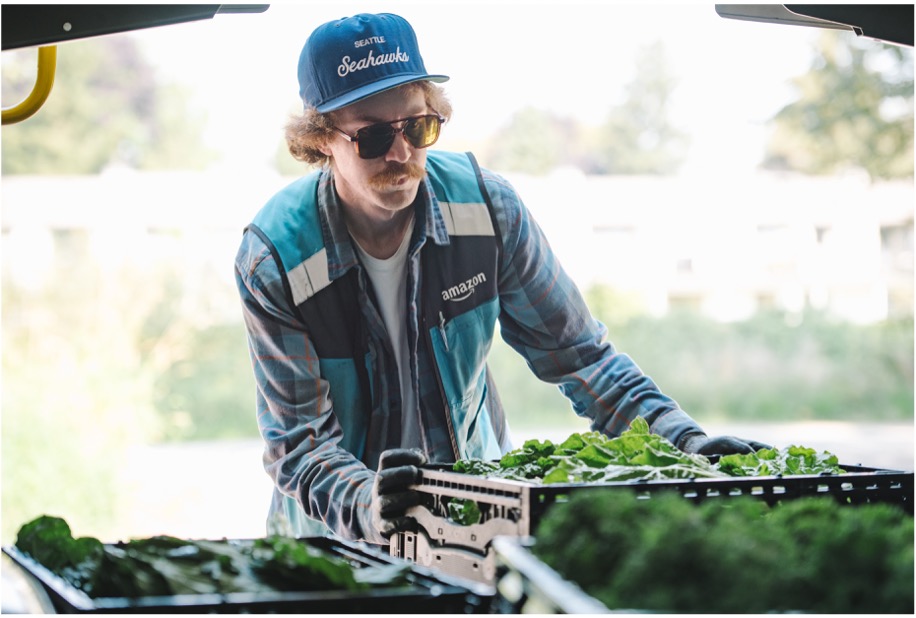
Amazon Local Good continues to support HAH with donated full truckload logistics and
distribution, delivering more than a quarter million pounds of produce to our partner programs.
And true to our role of connecting programs to build stronger food
systems, Amazon and HAH have also built partnerships with local farmers and hunger
relief organizations through our
Farm to Community (F2C)
work.
As highlighted in the earlier article about Farm to Food Pantry, F2C provides upfront
financial commitments to small, local farmers and growers, guaranteeing sales of
culturally relevant produce to food banks throughout the season.
Amazon Local Good and HAH built a new model for pro-bono logistics. Amazon drivers
and trucks are routed to pick up fresh produce from local farms organized by HAH and
F2C program partners like International Rescue Committee, Fare Start, Hopelink, and
others.
This program allows thousands more pounds of fresh, local produce to be distributed —
food that might otherwise fail to reach food banks or would be hindered by
transportation bottlenecks. It’s a partnership built on the strengths of different partners,
with a goal of delivering more fresh produce to those who need it most.
|
|
|
Washington Gleaning Network |
|
|
Turning Surplus into Sustenance: The Power of Gleaning |
|
|
Since HAH launched the
Washington Gleaning Network (WGN)
a couple of years ago, it has made significant progress in building connections, expanding gleaning activities, and strengthening the statewide infrastructure that supports this work.
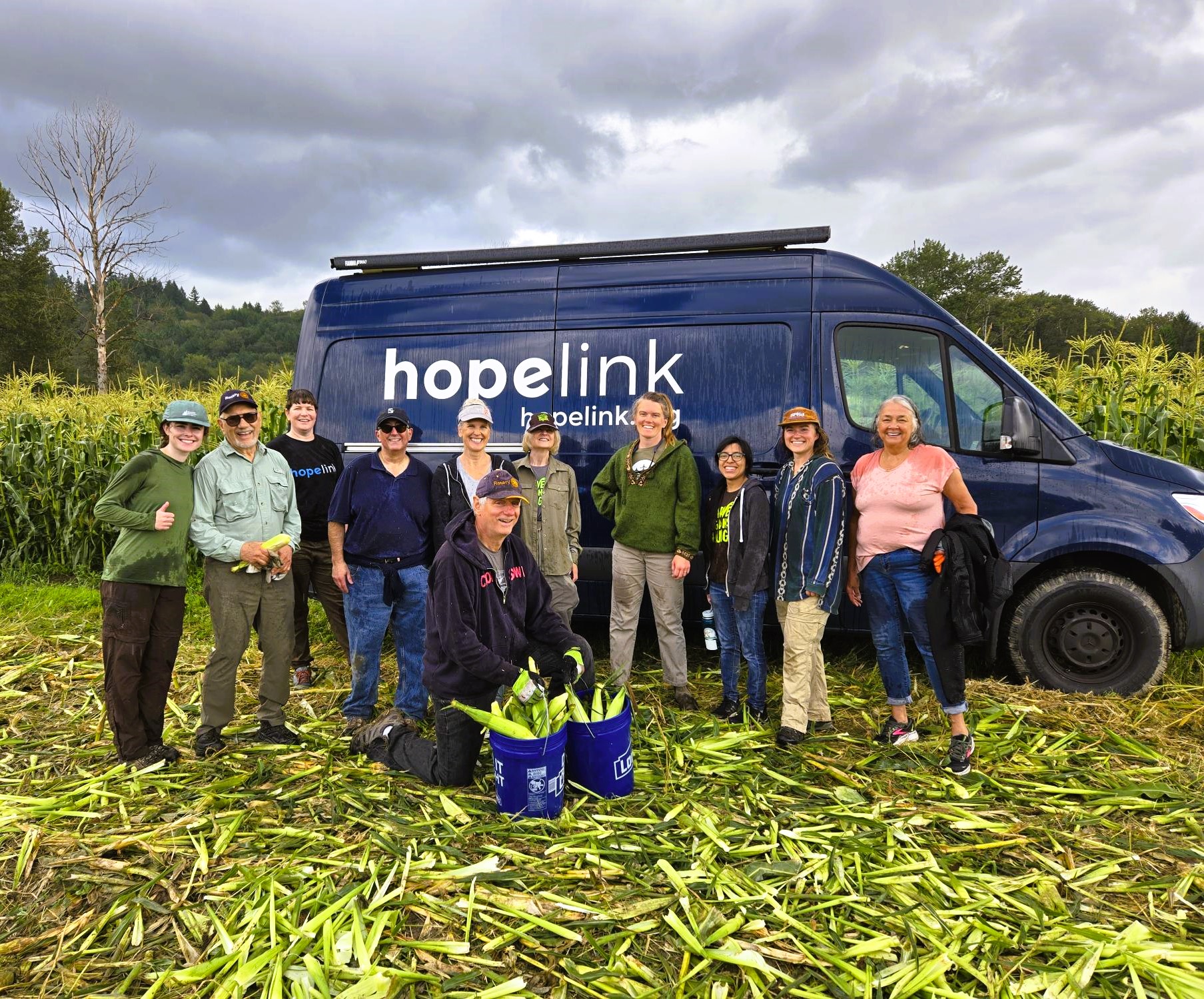
In the past year, WGN has organized several large-scale collaborative gleans, including the one pictured here at Food Bank Farm in Snohomish where several volunteers harvested over 2,000 pounds of sweet corn. |
| |
|
That day was more than just a harvest. It was an example of what the WGN makes possible: farms, food banks, and volunteers working side by side to get fresh, healthy produce that would have otherwise gone to waste into the hands of those who need it most. Other WGN accomplishments include partnering with University of Washington students to create Gleaner Guides that capture best practices from backyard fruit tree gleaning to farm harvests, and launching a pilot program in Okanogan County to explore how WGN can best support rural communities. |
|
|
King County’s Highest Honor for Environmental Stewardship |
|
|
|
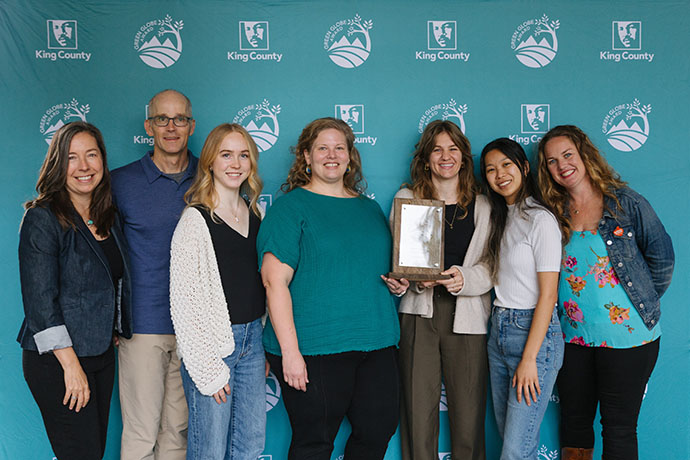
In May, the King County Department of Natural Resources and Parks awarded Harvest Against Hunger, PCC Community Markets (PCC), and Neighborhood Farmers Markets (NFM) the
2025 Green Globe Award
for the
Leader in Local Food Economy
category.
It was awarded for the success of
Growing for Good (G4G)
, which the three partners
|
|
|
launched in 2020 to provide 1) an alternative income stream for small farms after Seattle’s farmers markets closed due to COVID, and 2) additional fresh produce for food banks in PCC’s Food Bank program. Since its inception, the community has raised more than $660,000 to fund 22 local farms who delivered more than 230,000 pounds of fresh, local produce to 25 hunger relief organizations improving healthy food access while strengthening local agriculture. |
|
|
Your Legacy Can Feed Generations |
|
|
Transforming the systems that cause food insecurity is a long-term endeavor that requires vision, unwavering commitment and resources. That’s why we’re asking you to consider joining the
Harvest Legacy Society
by including a legacy gift in your will or estate plans. Leaving a legacy gift costs nothing today, but it sends a powerful message that you believe in a world without hunger and want to be a part of making it happen. With your support, we will create a future in Washington where no child goes to bed hungry and families have the nourishment they need to thrive because hunger no longer holds them back.
Please let us know
if you will consider making a legacy gift.
|
|
|
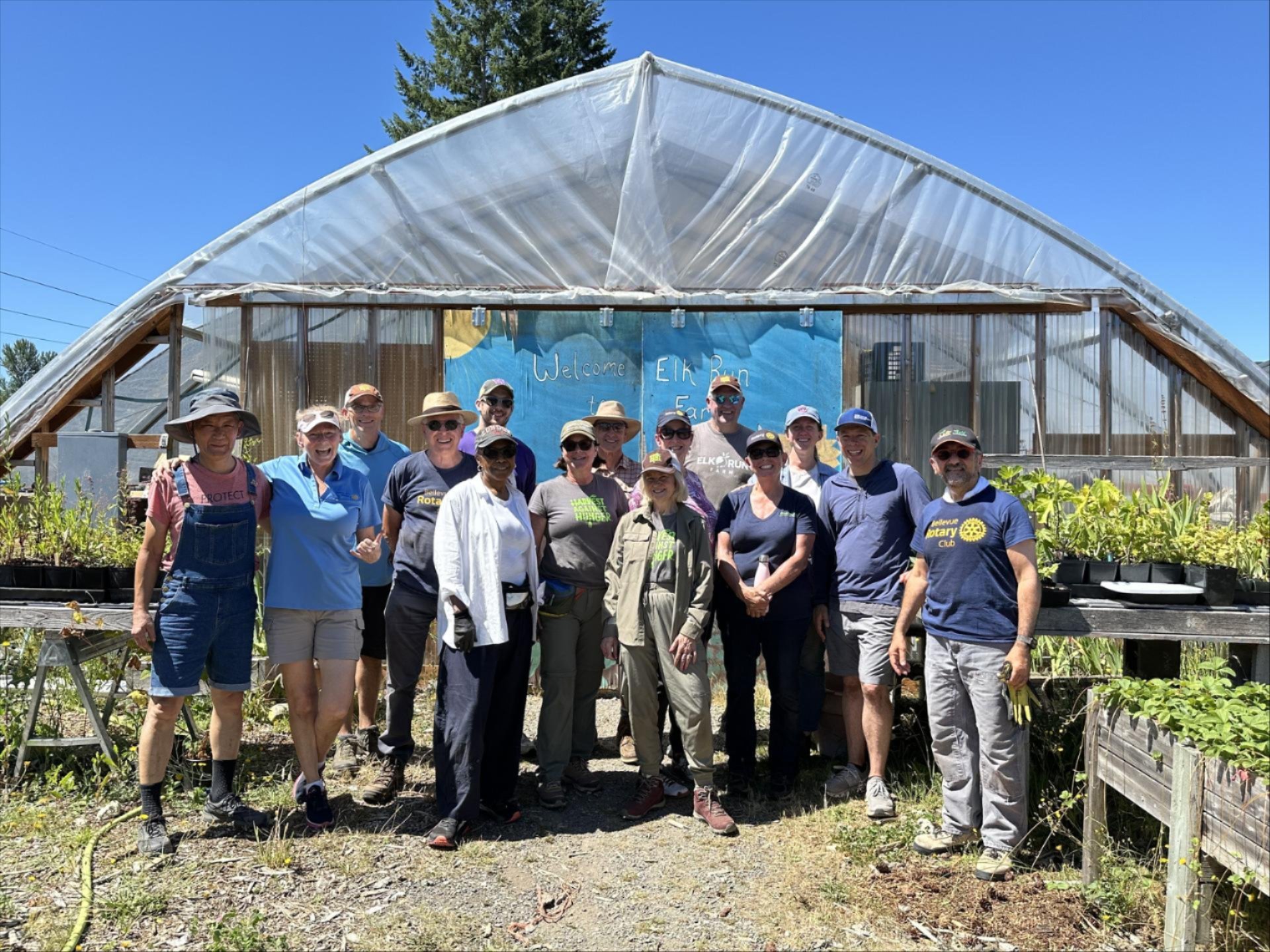
| Jim Tanasse, a Harvest Against Hunger board member for nine years, talks about the development of Elk Run
Farm in Maple Valley and how it inspired him and his wife, Deb, to make a legacy gift. Elk Run Farm exists solely to grow fresh local produce for 16 hunger relief organizations in South King County. |
|
|
Make a Difference. Get Your Hands Dirty. Feed Your Community. |
|
|
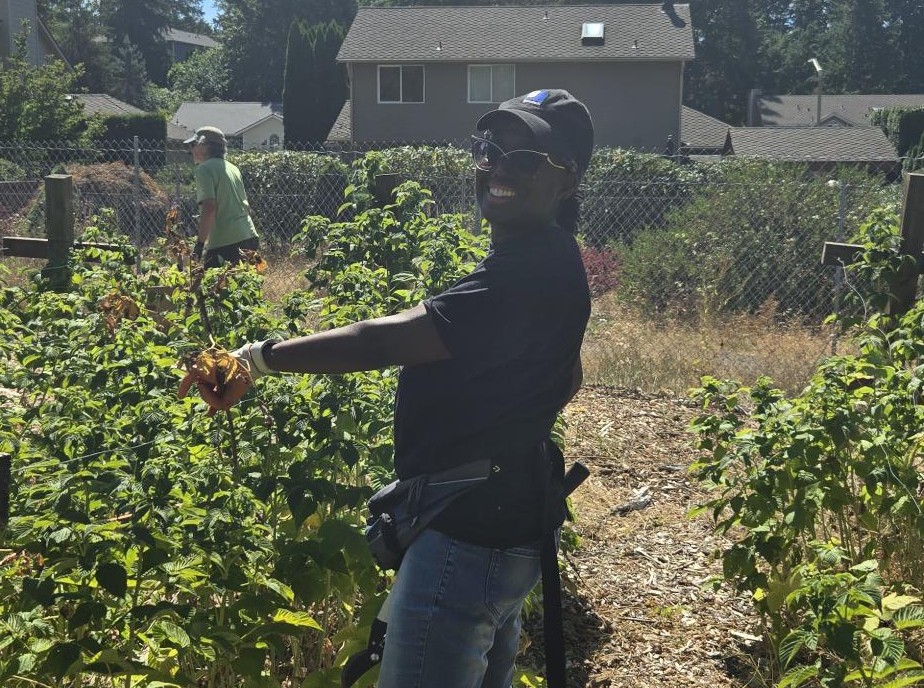
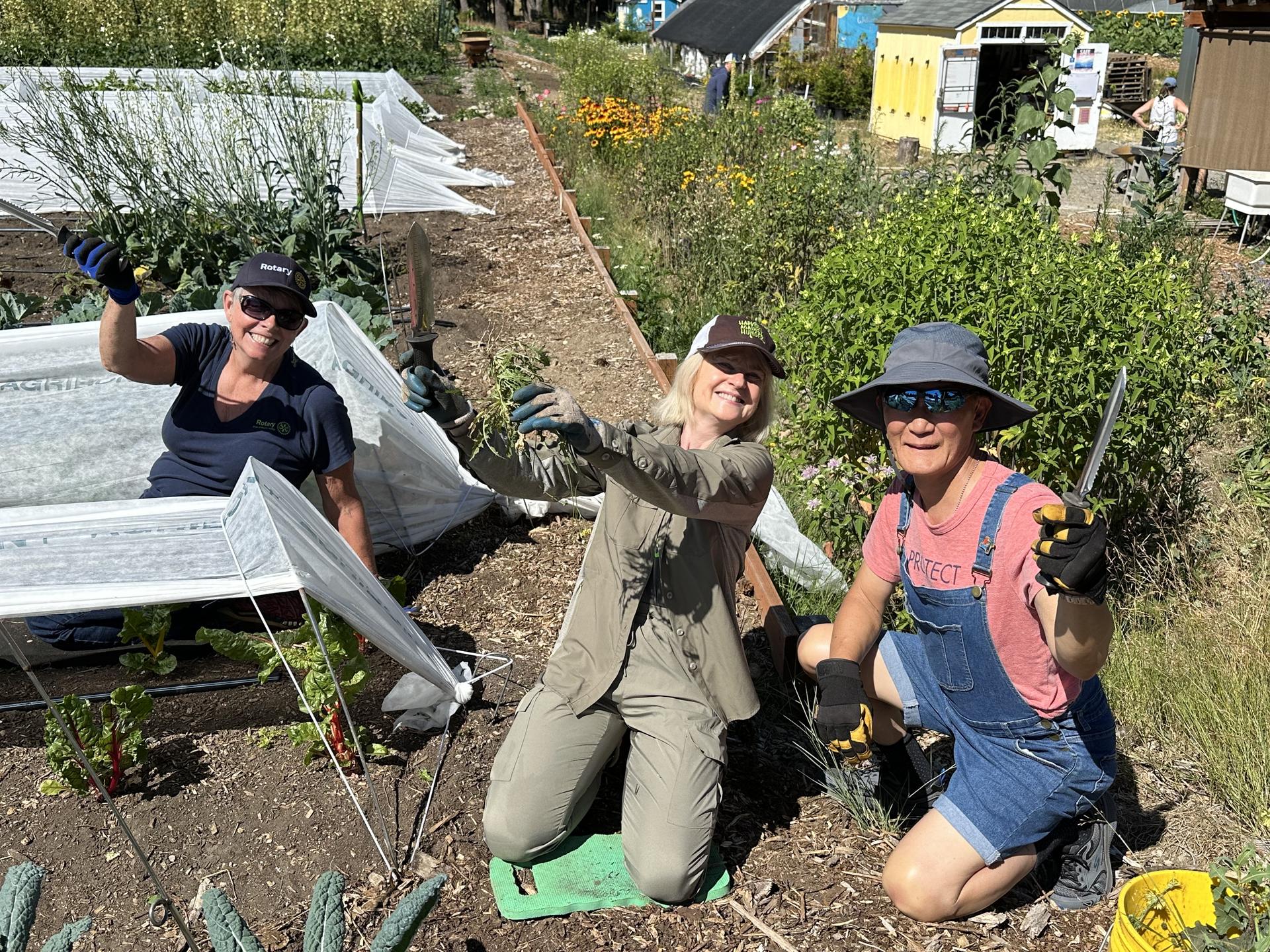
When you volunteer with us, you’re not just giving your time — you’re helping ensure fresh, healthy produce gets to the people who need it most and directly engaging in building healthier, more resilient communities. There will be opportunities to volunteer this fall, and we hope you will join us. Mountainview Blueberry Farm, Snohomish:
Organized by
Washington Gleaning Network
, which Harvest Against Hunger helped launch a couple of years ago to foster collaboration among gleaning groups across the state, the blueberry glean is an opportunity to roll up your sleeves and pick blueberries at Mountainview Blueberry Farm for Hopelink and Ballard Food Bank.
Work parties will be held from 9am -12pm and 12pm – 3pm on Saturday, September 6.
Sign up
at
The SuperGlean at Mountain View Blueberry Farm
.
Scroll down until you see the Sept 6 date. Elk Run Farm, Maple Valley:
Elk Run Farm thrives because of volunteers and will need your help with activities such as raking, hoeing, planting, weeding, hauling materials, mulching, turning compost and harvesting produce.
Work parties will be held from 10am – 2pm on Sunday, September 14 and October 12
. Go to
Harvest Against Hunger | Work Parties at Elk Run Farm
for additional information and to sign up. You can read a great story on Harvest Against Hunger’s role in converting 4.5 acres from a golf course to a farm that provides produce to local hunger relief organizations at
Elk Run Farm – Building Community Around Local Food Production. Ringsrud Orchard, Cashmere:
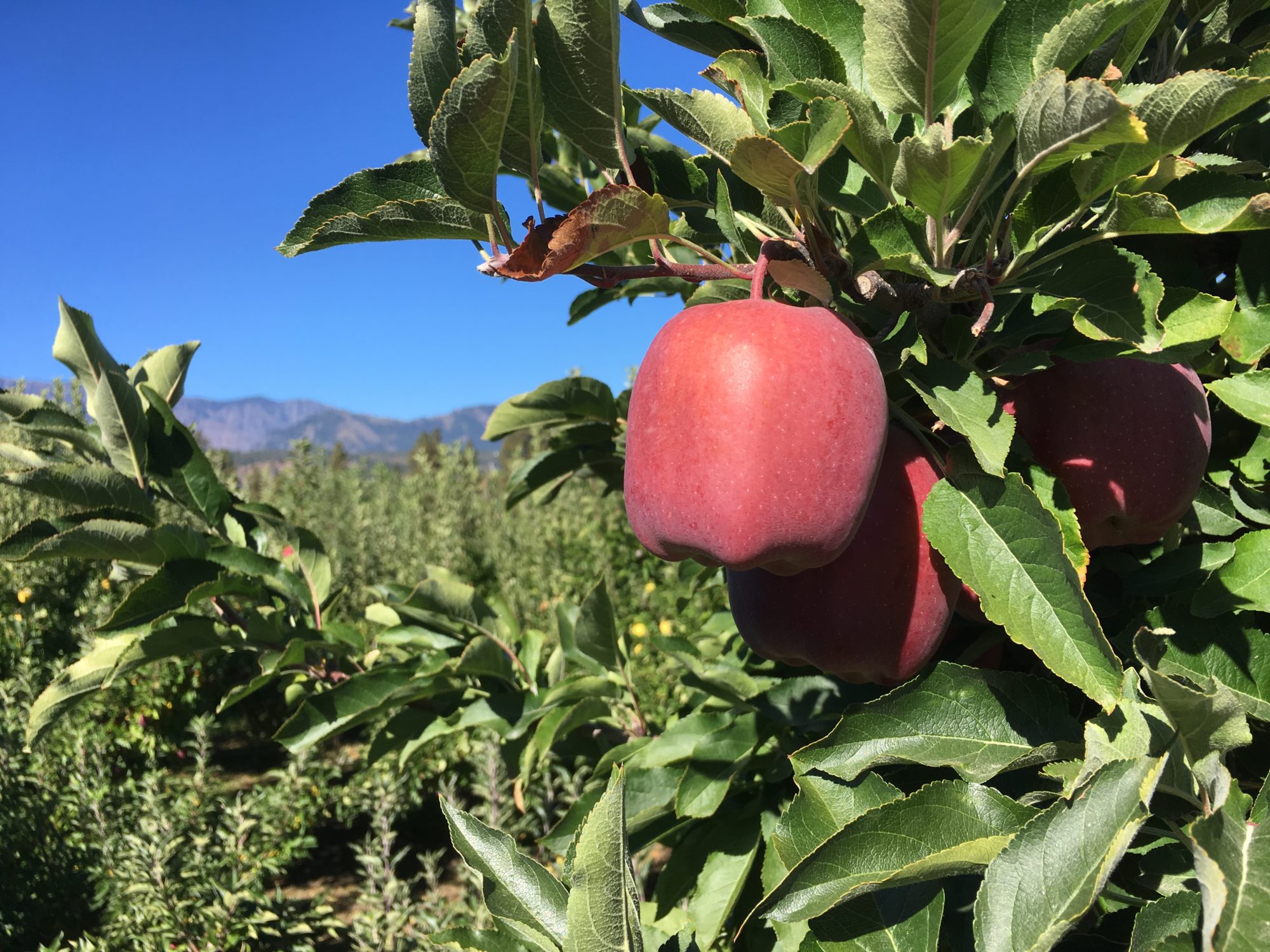
Ringsrud Orchard has generously saved us two rows of apple trees to glean — that’s about 10,000 pounds of fruit! The apples will be delivered to Upper Valley MEND, an organization that provides people in need in the Upper Wenatchee Valley with access to food, housing, wellness and economic security.
The work party will be held from 10am – 12pm on Saturday, October 11.
Sign up at
Big Apple Glean
.
|
|
|
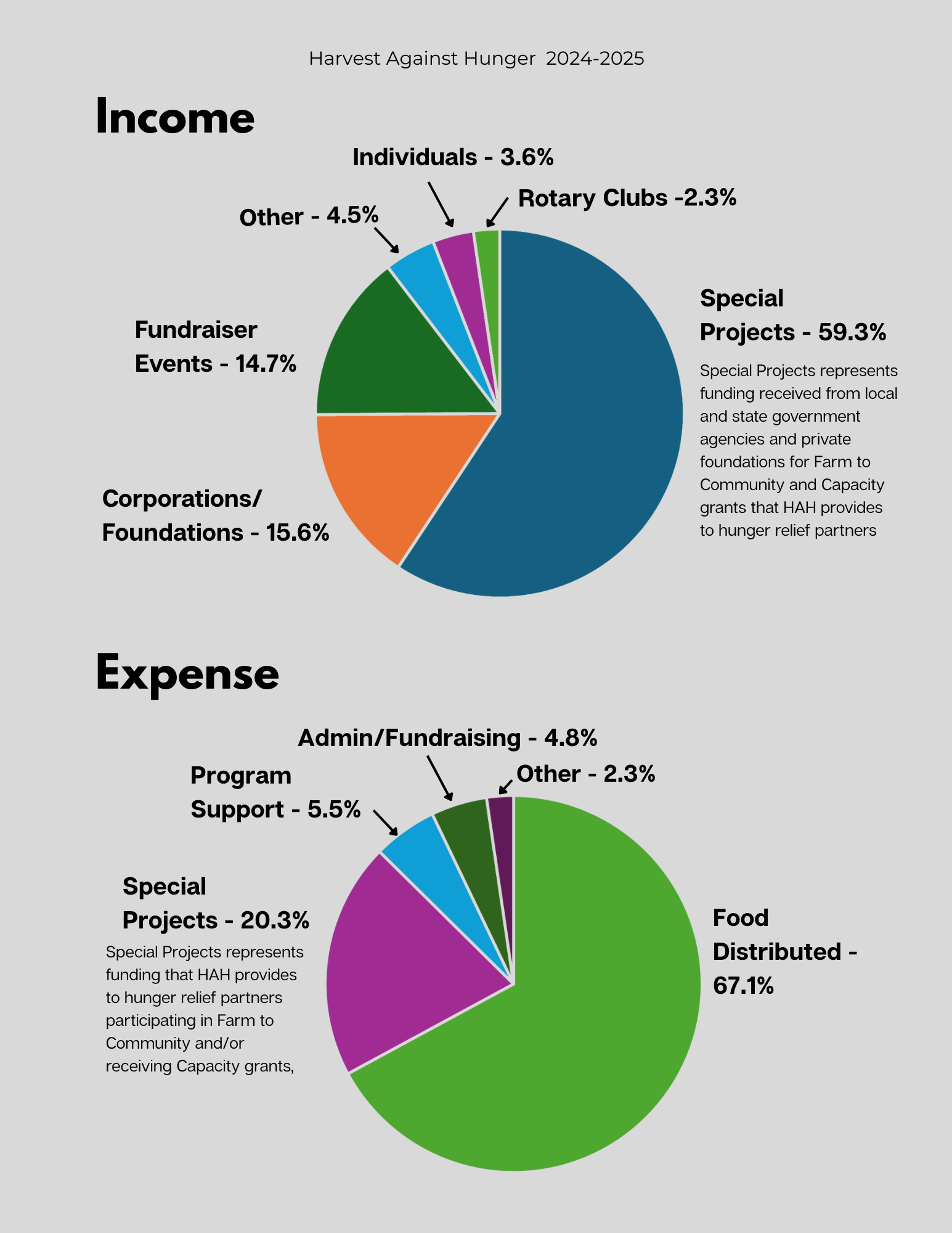
Because of you — our dedicated board, tireless staff, steadfast hunger relief partners, and the 600+ compassionate individuals, corporations, foundations, tribes and Rotary clubs who stood with us in fiscal year 2025 — people in need are finding nourishment, dignity and hope.
Your generosity is feeding neighbors today and building a hunger relief system strong enough to sustain generations to come.
Yet we know the road ahead won’t be easy. Cuts in federal funding will widen the gap between need and resources, making your support more vital than ever. Thank you for standing with us in this critical work.
With Gratitude, |
|
|
David Bobanick Executive Director
P.S. You can find a complete list of our supporters
here
.
|
|
|
|